casualization of aim
!! this page was AI translated and may contain inaccuracies !!
!! this page was AI translated and may contain inaccuracies !!

in the world of esports sweats, cyber-sardines and hardcore gaming, the cult of aiming has been taken to the absolute.
people just endlessly jerk off on training maps, duel, play aim trainers, chase the perfect mouse, pad, skates, posture, resolution, fov and shit, etc. etc. - all the fucking rituals of a competitive gamer.
but its potenshul is seriously limited by systems designed to even the odds between players of different skill levels.
the main enemy of raw aiming skill is randomness and restrictions - devs figured out ages ago that a game where victory belongs exclusively to whoever has faster reactions and better mouse control is doomed to a niche audience (the quake series as an example) - new players will leave butthurt, and matchmaking won’t cope with the gigantic skill gap between the top and bottom.
so out come the crutch systems: random bullet spread (rng spread): the most obvious example, even in the most popular tactical shooter - conder strok, considered the benchmark for esports (well, at least it’s the most popular), bullets from any gun while standing still don’t land in exactly the same spot, but within some spread circle following a gaussian distribution. In valo this spread is even more pronounced - there’s no way to reliably control every bullet - you can only increase your chances of hitting.
any attempt to hit an enemy is a whole rain dance around random deviation (plsregister).

controlling movement speed is a key aspect: in many games (cs2, valorant etc.) characters’ base movement speed is relatively low and predictable, which is a damn powerful equalizing tool.
against a slow target, a beginner and a pro will aim almost equally effectively - the difference in their skill will be minimal.
a tracking genius won’t be able to unleash their potenshul simply because the target doesn’t challenge them - the whole “range” between bad and good aim gets compressed, the difference shows up when there’s a fast, unpredictable target - a noob will just get lost and won’t hit it, while a cracked player, even doing worse than against a slow target, will still manage to track it.
so slow movement is a hidden mechanism that keeps a strong aimer from unleashing their full potenshul against a weak opponent.
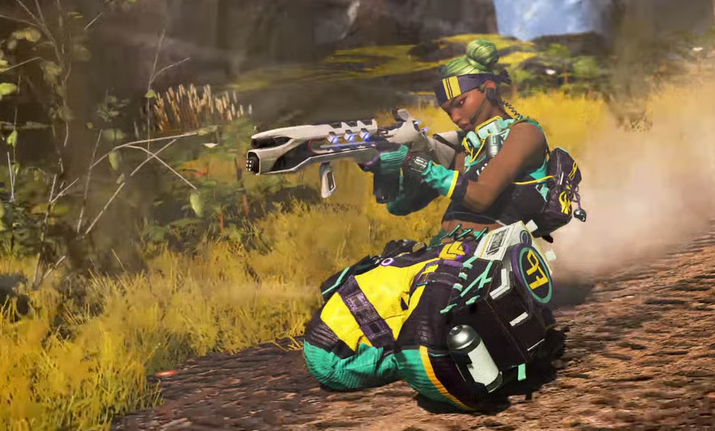
Shooting on the move - a mechanic almost entirely removed from tactical shooters, in cs you basically can’t hit shit while moving unless it’s an smg or a glock - this is a deliberate decision that shifts the focus from shooting to positioning and tactics.

the miss system (bloom), damage falloff over distance, complex ballistics - these are all layers of randomness that add luck to the equation - sometimes a shitty shot hits and a perfectly aimed one doesn’t.
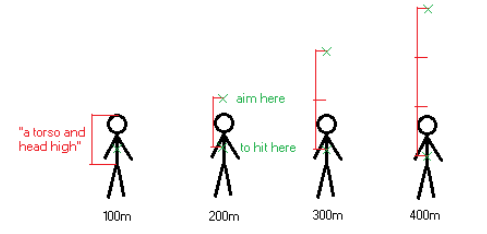
the point is to lower aim’s skill ceiling (cancel out aim-advantage) - the difference between a good aimer and a godlike one is neutralized by the fact that even a god can’t guarantee a hit because of rng, and against a slow target their advantage won’t be as obvious. A beginner always has a chance at a random hit or a “lucky” headshot.
(time to kill)
low ttk: typical of tactical shooters, kills happen in 1-2 hits - you’d think you need cracked aim here to click heads nonstop. But in practice the deciding factor is often positioning (you can flank the enemy, surprise them with your position, kill them before the duel even starts), knowing angles (prefires, off-angles etc.), luck (even a noob can randomly one-shot anyone while running)
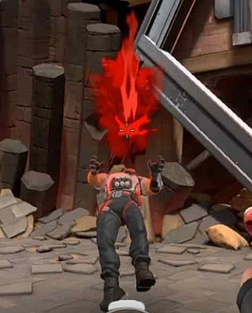
high ttk: an arena shooter classic - here you need to track them continuously and hit them many times in a row - accidentally tracking someone for a dozen seconds just isn’t gonna happen.
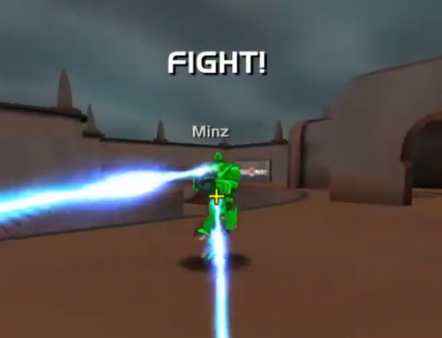
since pure aim is a difficult and veeery boring skill that takes thousands of hours to hone, developers shift the focus to other mechanics:
tactics and communication - you can be really bad at moving your mouse but keep surprising the opponent, taking unexpected positions, making calls for teamwork, using abilities.
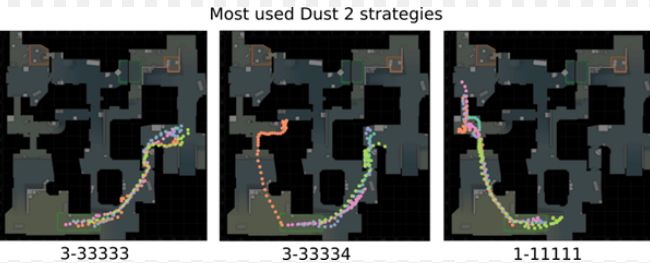
movement - in tac shooters it acts as a limiter (slow and predictable), in arena shooters as a separator (fast and complex), letting a strong player dodge and show off superior tracking.

abilities - an extremely powerful tool for devaluing aim - why aim perfectly when you can spam the opponent with grenades, turrets, smokes, all kinds of slow zones and flashes. These mechanics don’t need precision, they need good decision-making and timing.
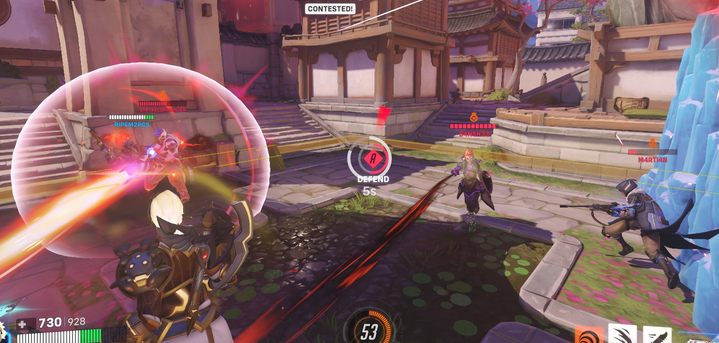
aim remains an important skill, but most competitive games are designed to casualize it, make it one of many factors in winning, but not the only one and definitely not the main (decisive) one.
slow movement, rng spread and loads of abilities - this is a design philosofart aimed at keeping the game accessible to most people.
comments